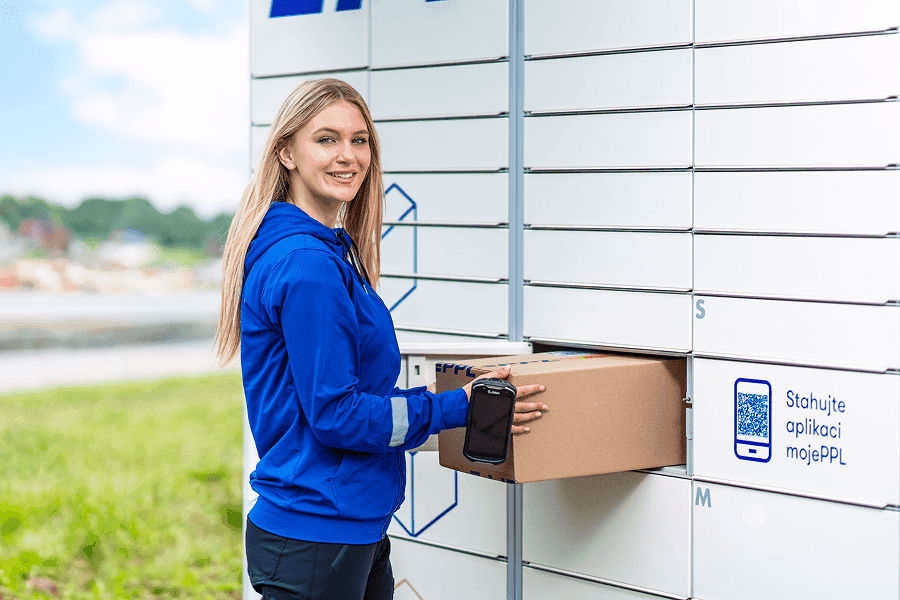
Parcel boxes have become a normal part of life in towns and villages alike. Even so, recent months have brought attempts to regulate them through so-called market ordinances. Those attempts run up against statutory limits. Parcel boxes operate under the postal services regime and do not fall under the Trade Licensing Act. Expert opinions and case law are clear on this point.
The legal framework is clear: parcel boxes are not a licensed trade
In connection with the current discussion about possible restrictions on parcel boxes by means of the so-called market ordinance (tržní řád), we consider it important to set the record straight on a fundamental point of law: PPL's parcel boxes are operated under the postal services regime pursuant to Act No. 29/2000 Coll., on Postal Services, as amended, and Section 18 of the Trade Licensing Act, on the basis of which municipalities may adopt a market ordinance, therefore cannot be applied to them.
This legal interpretation was confirmed by the Ministry of Industry and Trade in its opinion of 15 January 2025, as well as by the Association for Electronic Commerce (APEK). The opinion makes it clear that the power of municipalities to regulate the provision of services outside business premises applies solely to activities falling under the Trade Licensing Act. Postal services, which include the operation of parcel boxes, do not fall under that act.
We support legal certainty and sensible self-regulation
PPL's parcel boxes are a modern and efficient form of delivery that makes shipments easier to collect for people in cities and smaller municipalities alike. Their operation is fully in line with Act No. 29/2000 Coll., on Postal Services, and also rests on rulings of the Supreme Administrative Court and the Court of Justice of the EU, which define a postal service as an activity comprising the collection, processing and delivery of a shipment on the basis of a postal contract.
Together with other box operators and members of the APEK association, we recognise the need for clear, comprehensible and lawful rules. That is why we are actively involved in preparing self-regulatory measures that will define a responsible approach to the choice of locations, to box design and to the way boxes are integrated into public space.
Restricting boxes would harm the public most
Parcel boxes are no longer a marginal service; using them has become a normal part of everyday life. According to a survey carried out by Nielsen Admosphere in May this year, 72.2% of e-shop customers have already used a parcel box, for 46.4% it is their most frequent delivery choice, and 90% of the population would be against doing away with them. A sudden reduction in the availability of these services could therefore cause difficulties for millions of people across the country.
Parcel boxes also help to reduce traffic in cities and improve everyday life in municipalities where almost all amenities, shops included, are missing. A well-placed box can save dozens of individual delivery journeys a day. Planned sensitively and intelligently, it is a solution that contributes to more sustainable logistics and to greater comfort for residents.
PPL's transparent approach: clear rules, open dialogue
At PPL we value our cooperation with towns and municipalities, and we are ready to hold a partnership dialogue about the choice of suitable locations and about ways of integrating boxes into public space. That is also why we have published the Principles of Responsible PPL Box Placement, which we follow whenever we install a box.
We are convinced that parcel boxes can be a fully fledged part of the urban environment – provided they are installed thoughtfully and with respect for their surroundings. At PPL we believe this is precisely the route to a long-term sustainable solution that benefits everyone – cities, residents and carriers themselves.
Is there anything about boxes you are unsure of? Write to us, we are here for you!